

As anticipated last month, Toronto’s real estate market in November 2025 came in weaker than the same period in 2024. This softer performance wasn’t a surprise: the Fall 2024 rebound stalled abruptly after the U.S. election brought in a pro-tariff president. Throughout 2025, the resulting trade tensions have eroded consumer confidence and pushed many buyers to the sidelines. November prices fell 4% year-over-year, driven by a 9% drop in the detached segment. Total transactions were down 14%, with condo apartment sales leading the decline at 22%.
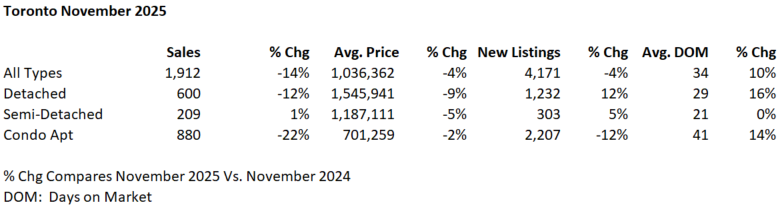
There are 5 months of inventory (MOI) for the entire market with semis and detached at 2.2 and 4.3 MOI, respectively. The condominium apartment market is responsible for bringing up the average with 6.1 MOI.
The average sale price for Toronto condos has been increasing – albeit slightly for the past 3 consecutive months. Despite an almost unheard of supply of condominium apartments, there is resilience in this market.
There are good opportunities for condo buyers who will occupy the unit and can comfortably afford a first-rate condo (ie. location, view, amenities, size, layout, low maintenance fees etc.) and at least a 5 year time horizon.
But what about investors? The condo market has been weak over the past few years because the regulatory framework skews heavily in favour of tenants and the financials haven’t been good. Would you be surprised that the financials have significantly improved since the heady days of 2022? Let’s compare the prime downtown C01 Toronto market for 1-bedroom condo units in peak Q1 2022 and the current Q4 2025. I think we can draw similar conclusions with other areas.
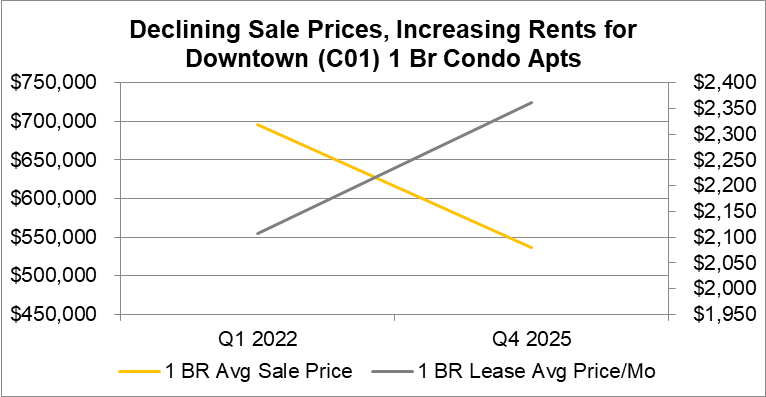
The orange line in the chart shows how the average downtown (C01) 1-bedroom unit has dropped 23% from $696,000 in Q1 2022 to $537,000 in Q4 2025. Meanwhile, the grey line shows how rents for these units have increased 12% from $2,107/month to $2,361 in the same time period. The remaining factor is interest rates. The average 5-year discounted fixed rate in Q4 2025 is 3.77% compared to 2.46% in Q1 2022.
The table below analyzes the difference in up front costs and ongoing costs (mortgage term based on 30-year amortization).
Q1 2022 versus Q4 2025 Investment Analysis
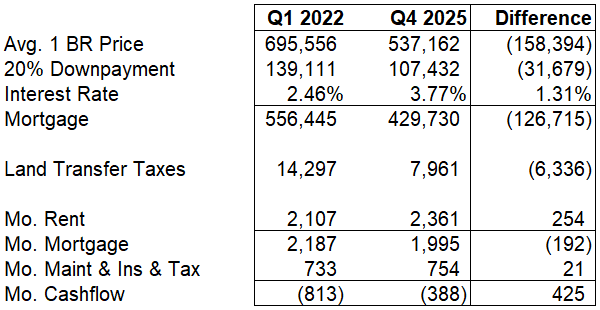
The investing proposition is stronger now than in 2022. With lower prices in 2025, there is $38,015 in up front savings from a lower down payment and land transfer taxes. The higher rent in Q4 2025 combined with the lower mortgage results in a monthly savings of $425 compared to investors buying 1-bedroom units in Q1 2022. The cashflow is still negative for an investor today as it was in Q1 2022 but less so. I don’t expect these financials to incite a rush of investors but the point is that despite the doom and gloom in the condo market, investors would do better now than they did back in Q1 2022.
This week, the Bank of Canada did not change the key interest rate. As we look toward 2026, I don’t expect interest rates will be much lower (if at all) in the first half of 2026. The early indication is that the BoC does not want to lower the key rate unless there is significant weakness in the job market or economy so any rebound in the real estate market will come from a shift in consumer confidence. Stay tuned.
Shen Shoots The Breeze: Gathering With Purpose
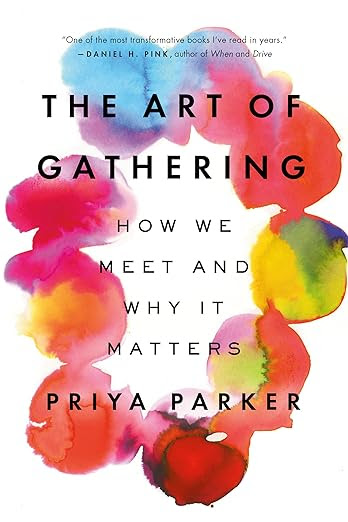
The holiday season often brings us together—around tables, in living rooms, over meals, and under twinkling lights. Our friends, Jen and Ryan, gave me a book, The Art of Gathering by Priya Parker, several years ago and I only got to reading it recently. One of the main points of her book is that connection doesn’t happen simply because people share the same space; it happens when we design our gatherings with intention.
This year, we’re taking a few of her principles to heart and weaving them into our holiday celebrations — and into future dinner gatherings as well.
- Create Meaningful Create Meaningful Connection Through Guided Conversation. Parker encourages hosts to ask better questions—ones that invite people to open up, discover each other, and build real connection. Instead of small talk, we are planning to introduce simple but meaningful prompts, like: What is one small thing that brought you joy this year? What’s something you learned about yourself in 2025? What’s a tradition—old or new—you’d love to start? These kinds of questions shift the room. They help even familiar groups see each other in a new light, and they make space for quieter voices to be heard.
- Encourage Everyone to Be Present (Yes, Even With Our Phones Nearby). Our phones are incredible tools—but they can also subtly pull us away from each other. Inspired by Parker’s emphasis on intentional presence, we are setting a gentle expectation this holiday: phones stay in a basket, purse, or pocket unless needed. Not as a strict rule, but as an invitation: let’s be fully here, just for a few hours. When people know they’re in a space designed for connection, they tend to show up more wholeheartedly.
- Plan the Ending—Don’t Let It Fade Out. One of Parker’s often-overlooked insights is the importance of a good ending. How we close a gathering shapes how people remember it. Instead of letting the night drift into tired goodbyes, we are planning intentional finishes—maybe a final toast, a moment of gratitude, or a simple “one thing I’m taking away from tonight.” A thoughtful ending ties a ribbon around the shared evening and gives everyone a clear emotional landing.
The Christmas season offers us a moment to pause and reconnect—not only with cherished traditions, but with one another and with the true meaning of the holiday. With the birth of Jesus, we celebrate the arrival of hope, peace, and a love that reshapes the world. And with a bit of intention, a few meaningful questions, and a thoughtful beginning and end, we can turn ordinary gatherings into moments that feel warm, memorable with deeper connections. Here’s to celebrations that connect us, teach us and help us to see each other with understanding and empathy.